Showing posts with label essential oil. Show all posts

Friday, April 23, 2021

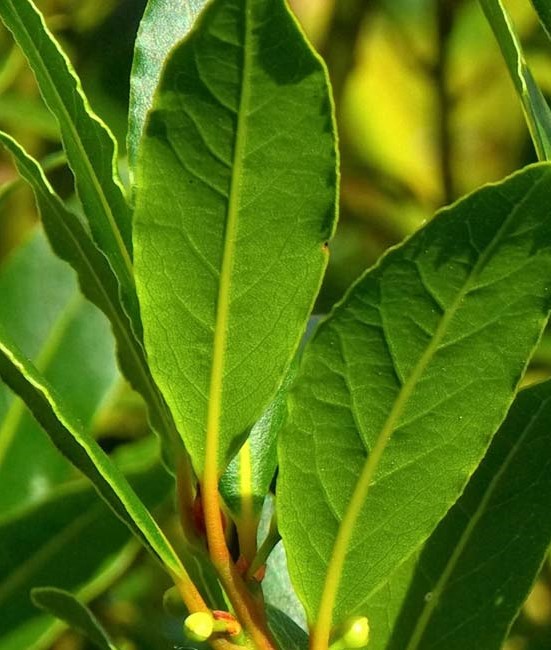
Essential oil in Laurus nobilis

Laurus nobilis L. (Lauraceae) or bay leaf is an evergreen shrub indigenous to the south parts of Europe and the Mediterranean area, cultivated mainly in Europe and the USA as an ornamental and medicinal plant.

The essential oil obtained from its leaves has been used for relieving hemorrhoid and rheumatic pains.

The leaves have been used, in Iranian folk medicine, to treat epilepsy, neuralgia, and parkinsonism. Leaves and fruits have been reported to possess aromatic, stimulant, and narcotic properties.

Laurus nobilis essential oil has many health benefits, including supporting a healthy immune system, providing cleansing properties, and delivering powerful antioxidants.

Research shows that this essential oil also has an antimicrobial activity and antifungal activity.

The main components of the essential oil were cineole (44.1%), eugenol (15.2%), sabinene (6.2%), 4-terpineol (3.6%), αpinene (2.7%), methyl eugenol (2.5%), α terpineol (2.2%), and -pinene (2.1%).
Essential oil in Laurus nobilis
Wednesday, August 12, 2020

Lemon verbena in herbal medicine

Plants have played a major role as human sources of medicine since ancient times, and carrying over of the knowledge of the plants among various generations has led to the discovery of a wide range of herbal Medicines.

Lemon verbena (Aloysia triphylla) is a Verbenaceae herb that grows spontaneously in South America and that is cultivated in the Mediterranean area.

It has been used in traditional medicine as an antispasmolytic, febrifuge, sedative, stomachic, and diuretic agent and in preventive treatment of arteriosclerosis.

The leaves and flowers are used for culinary purposes (fruit salads and jams, teas, desserts), cosmetics, for potpourris and as herbal medicines (colds, fevers, dyspepsia and diarrhea). In addition, the essential oil of lemon verbena has anti-bacterial and anti-fungal properties, while the essential oils, tea and tinctures proved an antibacterial and antioxidant activity.

Lemon verbena oil and its major constituent citral, induced apoptosis in leukemic cells in blood taken from patients with chronic lymphocytic leukemia. Anticarcinogenic activity has been reported for citral, (+)-limonene and β-caryophyllene.

Traditionally, lemon verbena is used as folk remedy in treatments of spasms, cold and fever. The essential oil is used in aromatherapy, extensively used in perfumery, especially in making eau de toilette and eau de cologne.
Lemon verbena in herbal medicine

Saturday, December 29, 2018

Citrus aurantium in herbal medicine

Citrus aurantium has enjoyed a rich history of uses in food, cosmetic and medicine. Citrus aurantium is a form a fruit commonly known as “bitter orange” and is often use as an Asian herbal medicine to treat digestive problem.

It is also a mild stimulant and is thought to contribute to appetite suppression and increase metabolic rate and lipolysis.

Volatile plant oils or essential oil are used in aromatherapy and are usually applied by gentle massage.


The oil of Citrus aurantium is an effective topical treatment in treatment-resistant, superficial dermatophyte infection. Citrus aurantium contains synephrine, which has ephedrine-like effects on the cardiovascular system.
Citrus aurantium in herbal medicine

Friday, September 29, 2017

The oil of citrus aurantium

The oils of Citrus aurantium are used in aromatherapy and are usually applied by gentle massage.

Citrus aurantium is made from a fruit known as Seville orange, sour orange or bitter orange. It has been hailed by some as a safe and effective treatment for obesity and weight loss.

Bitter orange peel is added to various foods such beer, liquors and other beverages and cakes. Moreover, bitter orange juice may be added in limited amounts to sweet orange juice.
Citrus aurantium has been shown in animal studies to increase the metabolism of fat while improving physical performance and helping to protect lean tissue.

Compared with ephedrine, citrus aurantium extract shows less effect upon appetite and more effect upon thermogenesis while exhibiting very little impact upon the central nervous or cardiovascular system.

At its nutritional peak, Citrus aurantium is rich in flavonoids and contains as agent called synephrine. Flavonoids are powerful antioxidants with anti-blood-clotting properties.
The oil of citrus aurantium

Tuesday, March 17, 2015

Peppermint in herbal medicine

Peppermint is not merely a simple domestic remedy but a genuine medicament that has proved most effective in the treatment of certain illnesses, particularly stomach and gallbladder complaints. Peppermint is considered the strongest mint medicinally, though the other mints have medicinal benefits as well.

Like any other medicament, it should therefore be taken only when and as long as necessary. Peppermint is used to treat gastric and digestive disorders, as well as tension and insomnia.

A variety of peppermint plants are cultivated in Europe and North America. Peppermint (Mentha x piperita) and its essential oil, first described in England in 1696, have been used in the treatment of cancers, colds, cramps, indigestion, nausea, sore throat and toothaches.

Peppermint is known has an activity against a wide range of pathogens including streptococcus, staphylococcus and candida.

Peppermint oil is often used externally, and can bring relief in case of migraine or headache if applied to the forehead and temples.

The oil may also be taken internally, one to three drops of the pure oil, preferably in some hot milk. This is said to be good for colds.
Peppermint in herbal medicine 

Saturday, May 17, 2014

Tea tree essential oil

Tea tree essential oil is extracted by steam distillation from the leaves of the Melaleuca alternifolia which is native to Southeast Queensland. The fragrance is spicy, strong and fresh.

Tea tree oil has become increasingly more known and used as a first aid remedy for a number of skin ailments. The oils help to balance, rejuvenate and stimulate the body and skin.

Tea tree essential oil has long been recognized as a strong antiviral and antibacterial property and has been used to treat a wide variety of infections, including yeast infections.

The oil shown to be twelve or thirteen times stronger than carboxylic acid, at one time the world’s number one antiseptic.

Tea tree can be used undiluted topically for athlete’s foot and herpes as well as insect, spider or scorpion bites.
Tea tree essential oil

Popular Posts

Other Interesting Articles